
State disburses Sh3b for youth enterprises under NYOTA
BY MYGOV TEAM
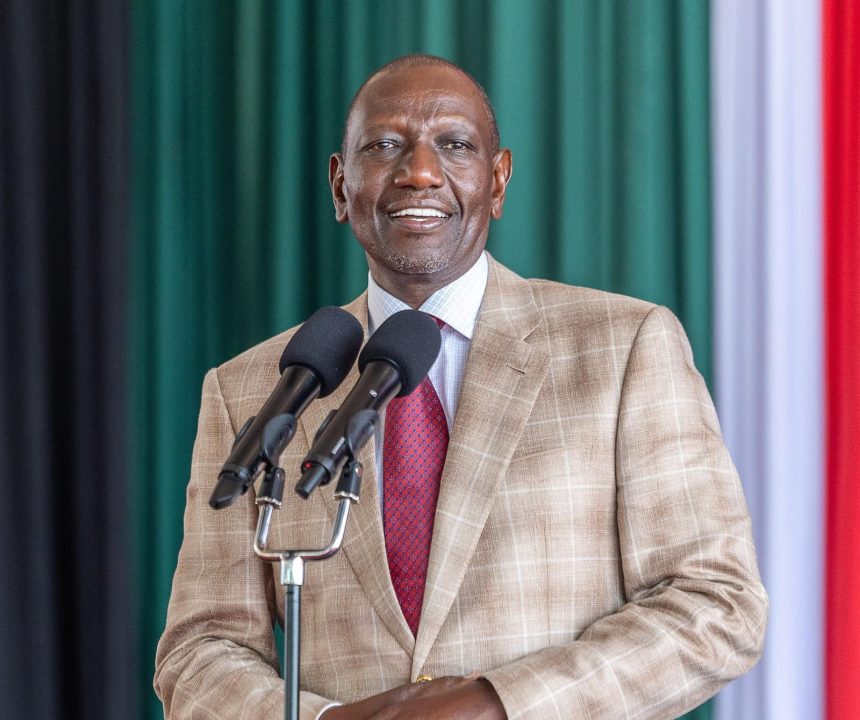
President William Ruto has launched the second phase of the National Youth Opportunities Towards Advancement (NYOTA) programme’s business support component, disbursing more than Sh3 billion to over 122,000 young entrepreneurs across the country.
Each beneficiary will receive Sh25,000, bringing the total support to KSh50,000 per youth under the initiative.
“This programme is one of Kenya’s largest investments in youth enterprise. Thousands of small businesses across the country have been given the much-needed financial boost to expand and thrive,” President Ruto declared.
As President Ruto launched the second phase of the NYOTA programme in Nairobi, similar exercises were being concurrently carried out in seventeen other regions across the country.
The President expressed joy at what he termed a tangible witness to what becomes possible when opportunity is placed in the hands of determined young Kenyans.
“If there was any doubt about the success of this programme, thousands of Kenyans across the country, with testimonies about successful business ventures, are answering this question,” noted the Head of State.
“The uplifting stories of success told from every corner of the country are clear testaments of what NYOTA can do. Those who dismissed Sh25,000 or Sh50,000 as too small to do anything have been proven wrong,” he said.
The President said the government is determined to ensure young people not only start businesses but also grow them into sustainable enterprises.
“I have directed the Ministry of Co-operatives and MSME Development to establish a national NYOTA identification mechanism to enable beneficiaries to access government services and incentives seamlessly,” he announced.
To further strengthen the programme, President Ruto directed government financing institutions; the Youth Enterprise Development Fund, Uwezo Fund, Women Enterprise Fund, and Kenya Industrial Estates to create a dedicated NYOTA Growth Product.
“This product will provide additional financing to enterprises that have already benefited from NYOTA, ensuring they scale up and thrive,” he said.
“I have asked the Intergovernmental Budget and Economic Council and county governments to consider a two-year business permit waiver for NYOTA beneficiaries.
This will give them breathing space to grow their businesses before facing licensing costs,” he said.
Under this rollout, about 50,000 youth will each receive a grant of Sh22,000 deposited into their NYOTA Pochi la Biashara Wallet, alongside Sh3,000 channelled to the Haba Haba Savings Scheme managed by the National Social Security Fund (NSSF).
Principal Secretary for Micro, Small and Medium Enterprises Development Susan Mangeni hailed the programme as proof of Kenya’s commitment to nurturing entrepreneurial spirit.
She noted that the second tranche disbursement demonstrated nationwide resolve to empower youth, describing beneficiaries as individuals who had shown “high entrepreneurial intent, outstanding entrepreneurial spirit and commitment to building sustainable businesses”.
Across the country, beneficiaries are already rewriting their stories.
In Tharaka-Nithi County, Eric Ngugi, a young entrepreneur living with a disability, turned scrap into opportunity.
With NYOTA support and his own savings, he acquired equipment to manufacture affordable flush doors.
He has completed 40 doors, has 27 on order, earned KSh32,000 in profit, and employs five people, with the capacity to hire five more as demand grows.
In Chuka Town, Fridah Karimi, a tailor, repaired her sewing machine, expanded her product range, strengthened her brand, and now earns about KSh35,000 in monthly profit.
“I had the skill but lacked capital. NYOTA gave me the chance to prove what I can do,” she said.
In Kakamega, Sonya Amisi doubled her flock of Kienyeji chickens from 200 to 400, added 300 chicks, and created three jobs.
“What was once a chore is now a business. I can see a future in poultry farming,” she explained.
In Isiolo, livestock trader Ibrahim Wako has grown from keeping two goats to five, with plans to double that number before year’s end. In Kitui, Eunice Katunge transformed a roadside kiosk into a fully stocked shop worth KSh85,000.
In Kisii, Josphat Kerongo Nyagaka cleared debts and grew his mobile phone repair business into a KSh100,000 enterprise.
In Kisumu, John Omumbo reinvested every shilling of profit to build a coffin-making business now valued at KSh100,000.
In Mombasa, Wycliffe Mulwa expanded a single fruit stall into a thriving retail and wholesale enterprise, earning profits of up to KSh7,000 a day.
“I never wanted handouts. I was waiting for an opportunity. NYOTA gave me that chance,” he said.