
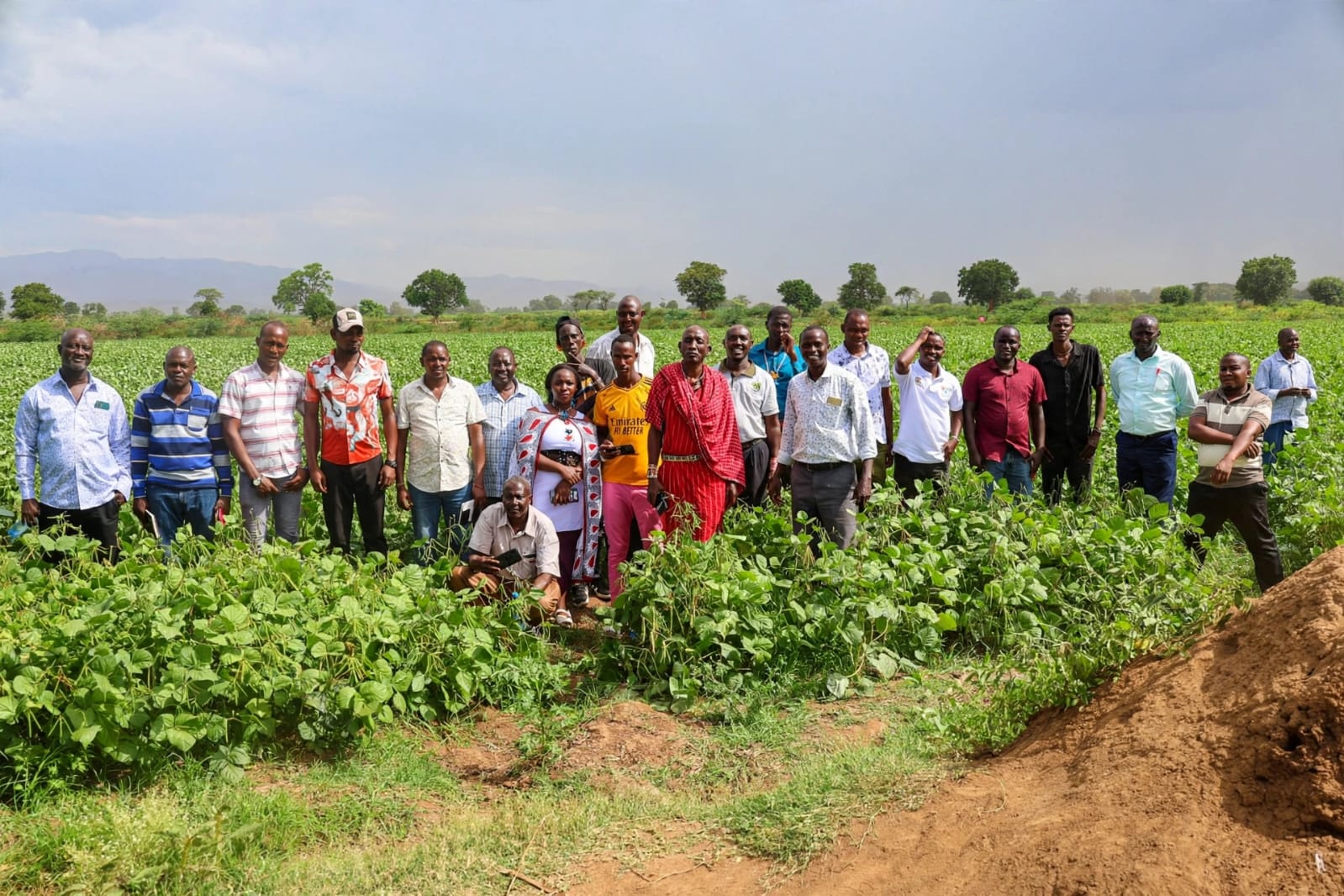
Learning on the Move: Farmers Take on Benchmarking Tours to Boost Yields
By Isaac Sanya and Peninah Kihika (KNA)
Farmers from the Nguruman Irrigation Scheme in Magadi, Kajiado County, have undergone farmer-to-farmer learning exchange and benchmarking visit to the Perkerra Irrigation Scheme in Baringo County aimed at strengthening sustainable and climate-resilient irrigation farming.
The visit, facilitated by the State Department for Irrigation, is anchored on five key thematic areas: governance and administration; registration of Irrigation Water Users Associations (IWUAs), by-laws and equitable water distribution; market linkages and cooperative societies; agronomic practices and crop management; and dispute resolution.
The National Irrigation Authority (NIA) management team at Perkerra Irrigation Scheme, together with the scheme leadership, received the visiting farmers and shared best practices that have enabled the scheme to sustain high productivity over the years.
Perkerra Irrigation Scheme Manager David Waweru took the farmers through the scheme’s governance, institutional and administrative structures, day-to-day operations and management practices that have contributed to its long-term success.
The Chairperson of the Perkerra Cooperative Society, Samuel Chebii, facilitated a session on market linkages, highlighting the benefits of collective marketing, aggregation, value addition and organised farmer groups in accessing better markets and improving incomes.
On his part, Perkerra Irrigation Water Users Association (IWUA) Chairperson Nicholas Bowen emphasized the importance of formally registering IWUAs, adhering to established by-laws and ensuring equitable distribution of water resources to promote harmony and efficient water use.
Farmers also received training on agronomic practices and crop management from the scheme’s agronomist, Justus Kiptum, who underscored the importance of improved crop husbandry, efficient water application and modern techniques for increasing productivity.
Justin Kiprono led the session on dispute resolution, explaining the approaches used at Perkerra to address water-related conflicts amicably and maintain cohesion among water users.
Beyond the classroom sessions, the farmers toured the Perkerra water source, where they learned how water is abstracted, conveyed to farms and sustainably managed to meet the needs of all scheme members.
They also visited various irrigation blocks within the scheme, interacting with host farmers, observing different crop varieties and gaining practical insights into crop diversification, field management and productivity enhancement.
The benchmarking visit is expected to equip Nguruman farmers with practical lessons and technologies that can be adapted in their home scheme to improve water management, increase production, strengthen commercialisation through strong farmer institutions and effectively resolve emerging disputes.
The farmers are also expected to leverage cooperative structures to access larger and more competitive markets for their produce, ultimately increasing household incomes.
The benchmarking tour has been organised under the Programme for Enhancement of Water Productivity, Production and Sustainability of Irrigation Schemes (PEWAPSIS) under the leadership of Director of Irrigation Water Management Maurice Opondo.
PEWAPSIS seeks to enhance the operational efficiency and performance of existing irrigation schemes to promote food and nutrition security while improving household incomes.